True wind and apparent wind — the difference
On board you almost never feel the true wind. What reaches the masthead fly and your skin is the apparent wind — the combination of the wind that is actually blowing and the boat wind your vessel creates by moving.
- True wind (TW): direction and strength as a stationary observer would measure them — for example ashore or at anchor.
- Boat wind: the part of the apparent wind that comes purely from boat speed. It always blows from dead ahead, opposite the direction of travel.
- Apparent wind (AW): what the moving boat "sees" — the vector sum of true wind and boat wind.
The wind triangle
True wind, boat wind and apparent wind form a vector triangle. You usually know two sides; the third follows:
- True wind as a vector (direction + strength)
- Boat wind as a vector (from ahead, length = boat speed through the water)
- Apparent wind = the resultant of the two
Because boat wind adds to the true wind, when sailing upwind it is almost always the case that:
- The apparent wind is stronger than the true wind.
- The apparent wind comes further forward (smaller angle to the bow) than the true wind.
On reaching and downwind courses this reverses: boat wind pulls the apparent wind forward and weakens it — which is why running before the wind often feels deceptively calm even when the true wind is strong.
Why it matters on board
- Sail trim: you trim to the apparent wind — the fly, telltales and wind instrument all show it. Trimming by a feel for the true wind gets it wrong.
- Course strategy: luffing up increases the apparent wind and moves it forward; bearing away reduces it. That is why a gust hits especially hard as you luff.
- Reefing decisions: downwind it is easy to underestimate the true wind because the apparent wind feels so mild. The same conditions can mean far more pressure once you start beating.
- Electronics: the masthead wind unit measures apparent wind. Your instruments only work the true wind back out from apparent wind, course and boat speed.
Working true wind back out
For planning and weather logic you often need the true wind — forecasts and GRIB data always refer to true wind. You can recover it from the measured apparent wind if you know boat speed and course: subtract the boat-wind vector from the apparent wind and you get the direction and strength of the true wind back.
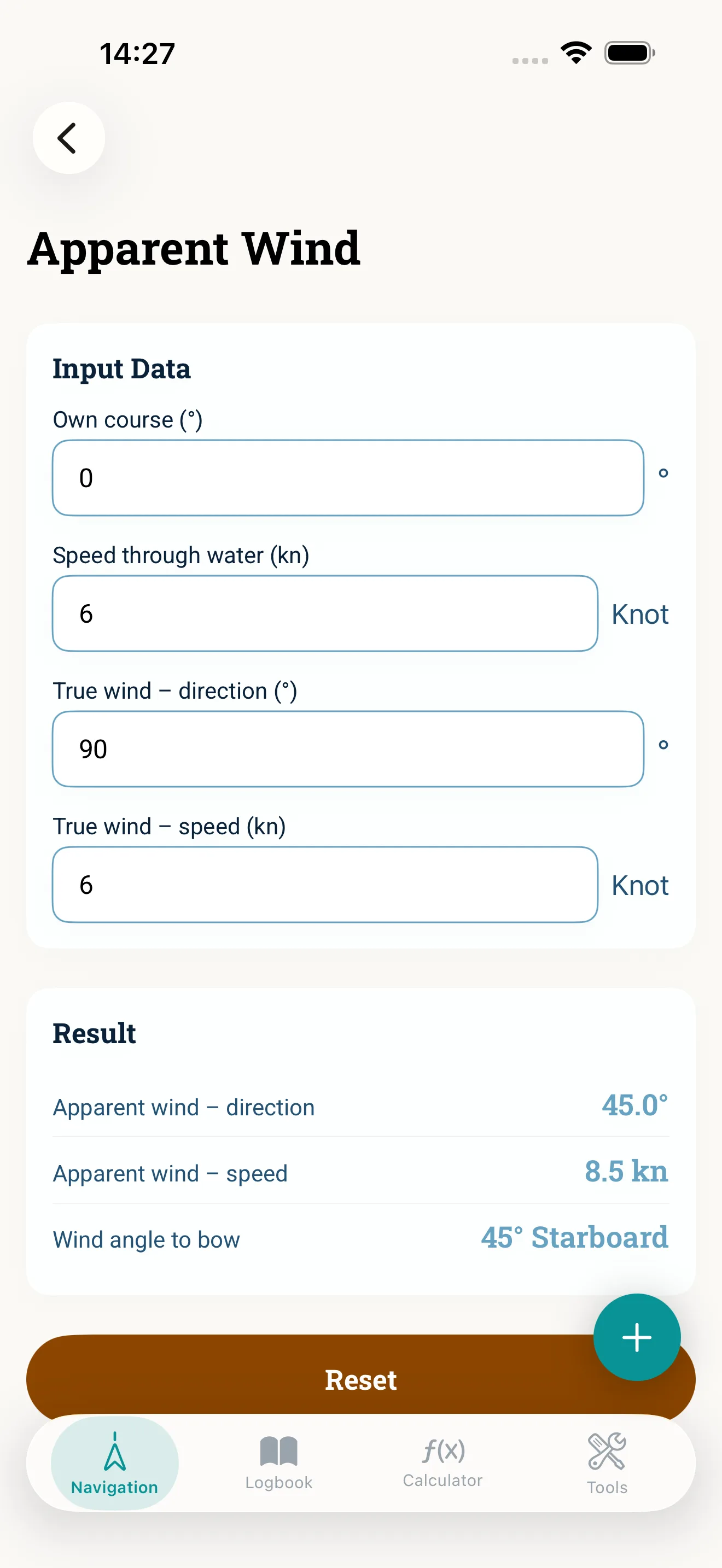
That exact vector calculation — in both directions — is what NauticCalc does for you: work out apparent wind from true wind, boat speed and course, or derive the true wind from the measurement. See Apparent wind calculator. Like the rest of the maths on board it works without a connection — see Offline navigation.
Relation to the course chain
Apparent wind, course and speed are linked: change course and the apparent wind changes too. Sound navigation keeps the wind allowance separate from the rwK, mwK, MgK course chain and from course correction, where wind and current offset feed into the steering course.
Common mistakes
- Trimming to true wind instead of apparent — the sails never sit right.
- Underestimating wind strength downwind, because only the weakened apparent wind is felt.
- Forgetting boat speed when working the true wind back out.
- Using speed over ground instead of through the water — boat wind depends on speed through the water, not over ground.
Conclusion
Apparent wind is not an exam detail but what you actually sail by on board. Keeping true and apparent wind clearly apart means better trim, more realistic gust assessment and earlier reefing decisions. The vector maths behind it is something you no longer have to do in your head.
Read more: Apparent wind calculator · Course correction · Offline at sea