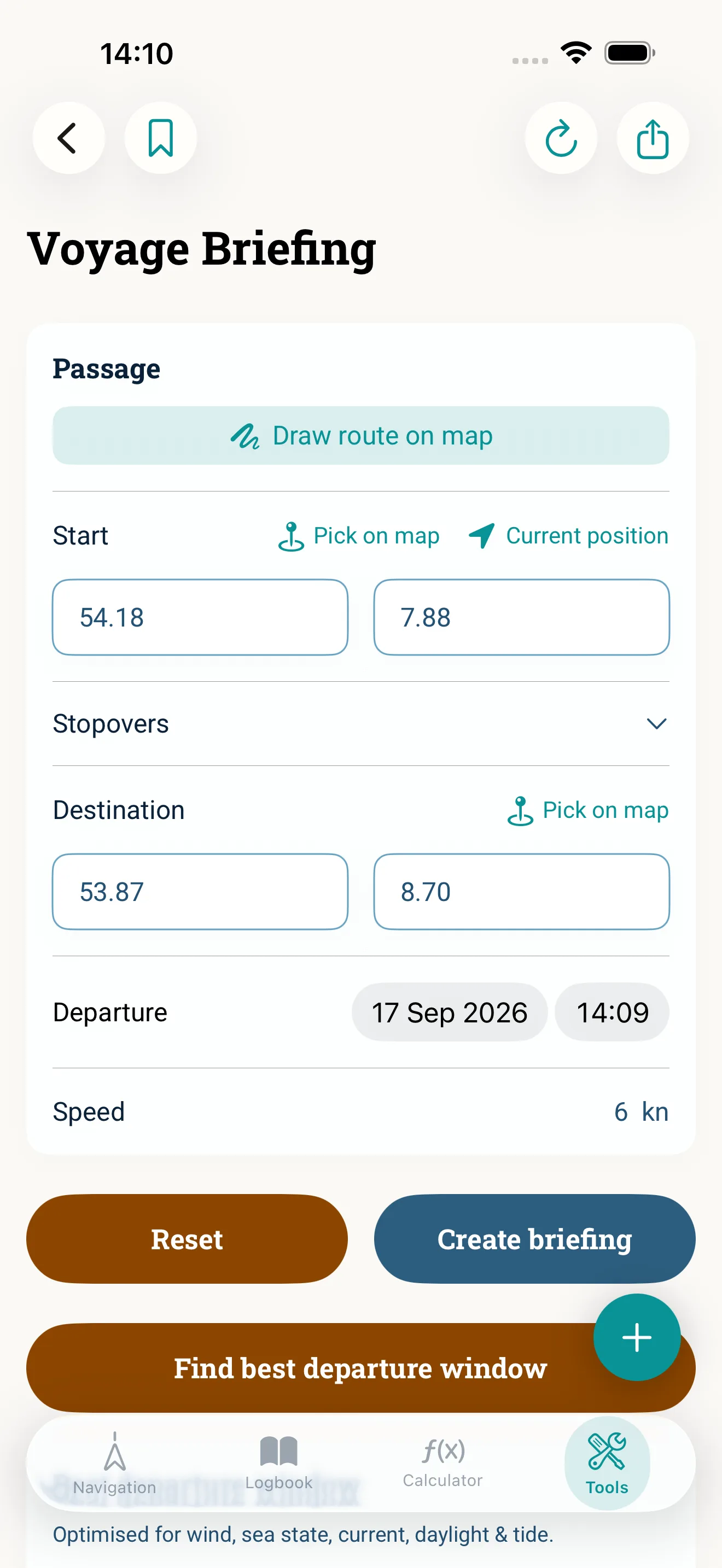
Passage planning is a chain, not a single number
Planning a leg does not mean working out one number, but bringing several threads together: how long will it take? Does the time window fit the tide? What is the weather doing? Is there enough daylight? A passage briefing bundles exactly these questions into a clear statement, before the lines are cast off.
The building blocks of a briefing
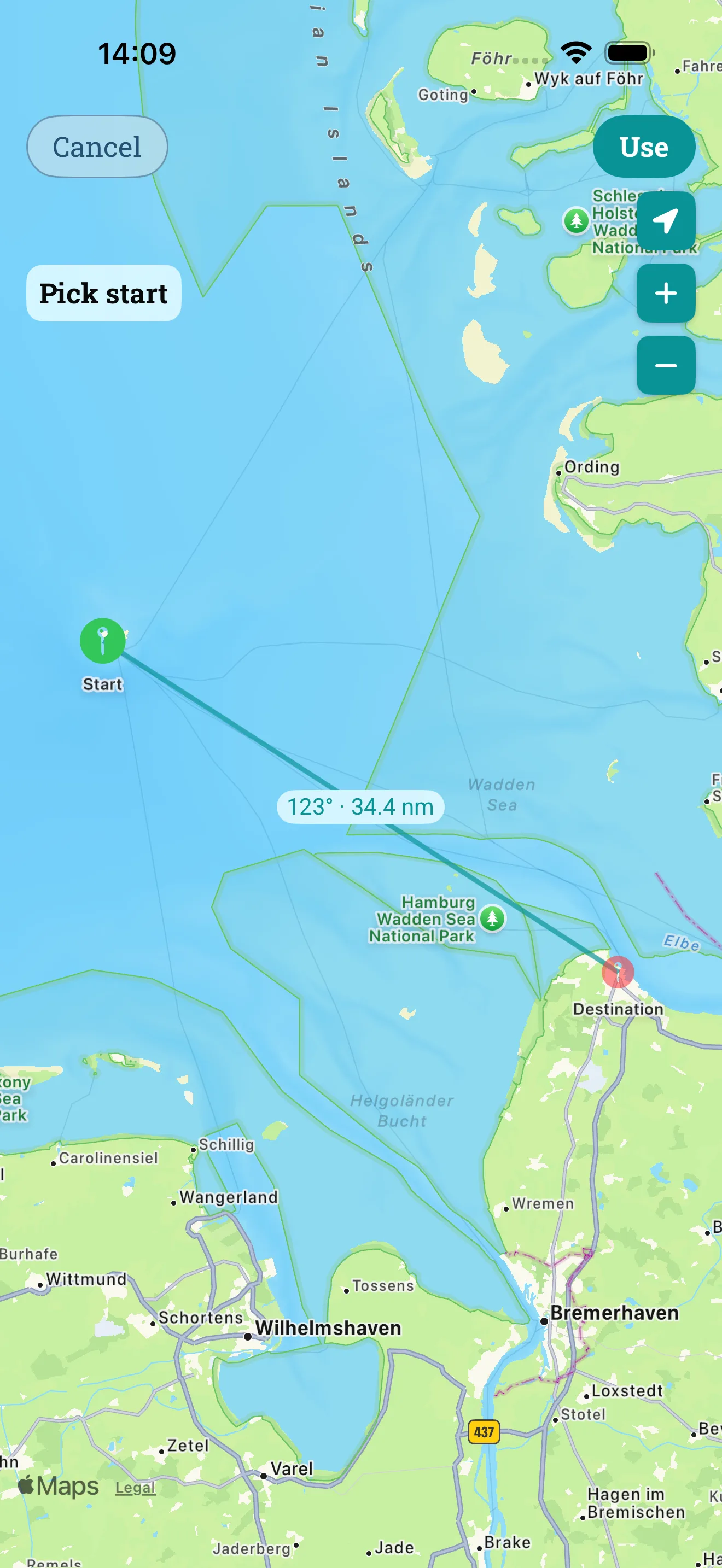
- ETA and passage time: from distance and expected speed comes the arrival time — the basis of everything. Details in the article Calculating ETA and in the ETA calculator.
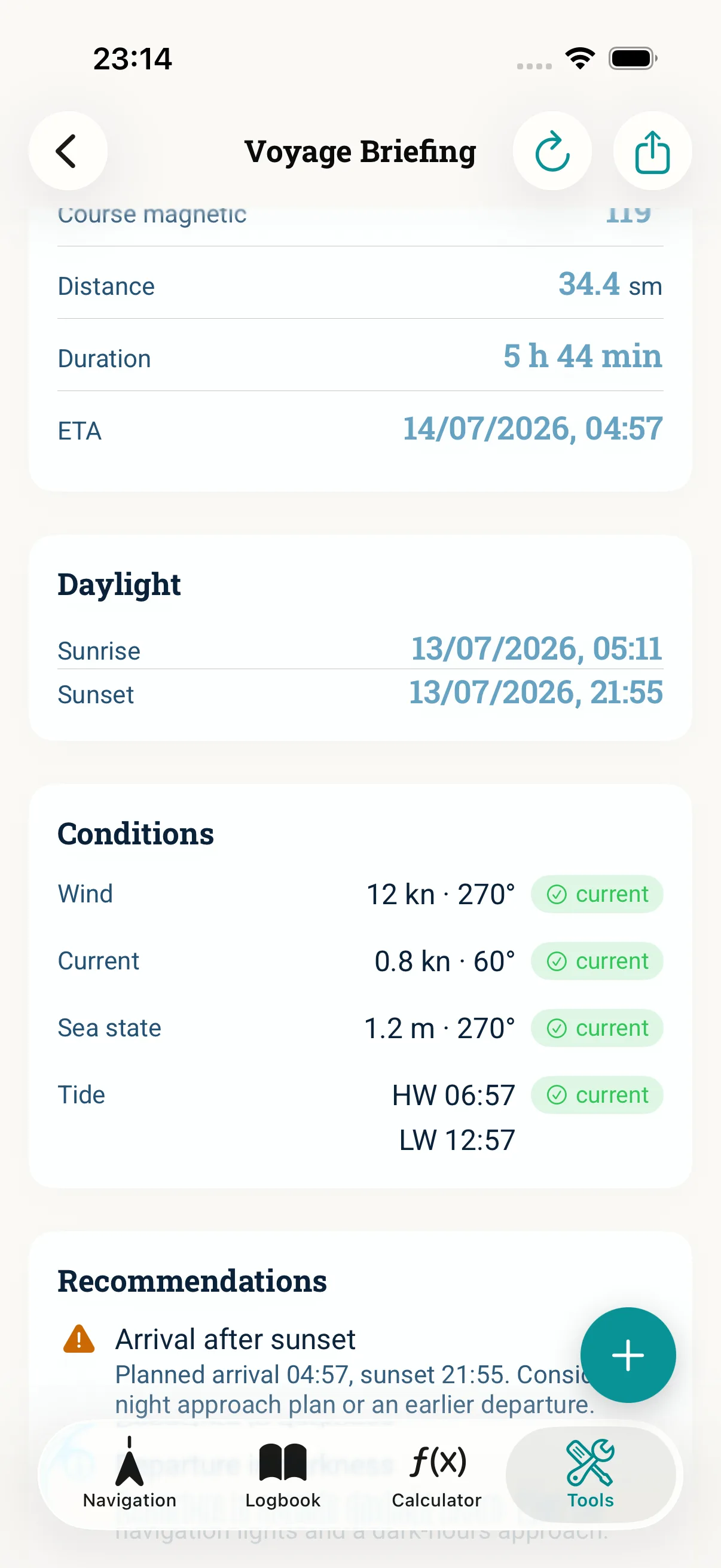
- Tidal time window: harbour entrances, shoals and current gates are often only passable around HW or LW. Does your ETA fall in the right window? See Tides & tide calculator.
- Weather: wind, gusts, seaway and visibility for the period — ideally as live data, see Weather on board.
- Daylight: sunrise and sunset. Do you arrive in daylight, or does it become a night approach?
Why “plain language” counts
Individual calculators deliver numbers — a briefing turns them into a statement: “Arrival 04:47, so 40 minutes after sunset; tide rising on arrival, entrance clear; wind 12 kn from astern — plan for a night approach.” This condensing is the real value: it shows conflicts (arrival after dark, tide too low) while you can still resolve them.
Before casting off and under way
A briefing is not a one-off document. If speed or wind change, the ETA shifts — and with it the tidal and daylight windows. That is why it pays to update the briefing under way. Because the core calculators run offline, you can do that without a signal too.
Common mistakes
- Only working out the passage time and looking at tide, weather and daylight separately.
- Assuming optimistic speed and missing the time window.
- Forgetting sunset and making an unplanned approach in the dark.
- Not updating the briefing when conditions change.
Conclusion
A passage briefing turns individual calculators into a dependable statement about the leg: ETA in the context of tide, weather and daylight. Whoever plans this way sees conflicts early — and makes the calmer decisions ashore, rather than in a rush outside the harbour entrance.
Read more: Voyage Briefing · ETA calculator · Tides calculator