Why weather data works differently on board
Ashore you open a weather app and get a ready-made forecast. On board the situation is different: you want marine parameters — wind, gusts, wave height, swell, current — and you want to know where the data comes from and what it costs. This is exactly where the BYOK principle comes in: Bring Your Own Key.
What BYOK means
Instead of pricing weather data into a subscription, NauticCalc uses your own API key from a weather provider. You create a key once (for example with a marine weather service), enter it in the app — and pull the data straight from the provider.
- Cost control: you only pay what your provider charges — and there are often generous free tiers. No extra app subscription.
- Transparency: you know exactly which service delivers the data.
- No vendor lock-in: the provider account is yours, not the app’s.
How to set up a key is covered in the Guide: Set up the weather API.
Which parameters matter
For planning on board, these are usually the ones:
- Wind: direction and strength, plus gusts — which are often more decisive than the mean wind.
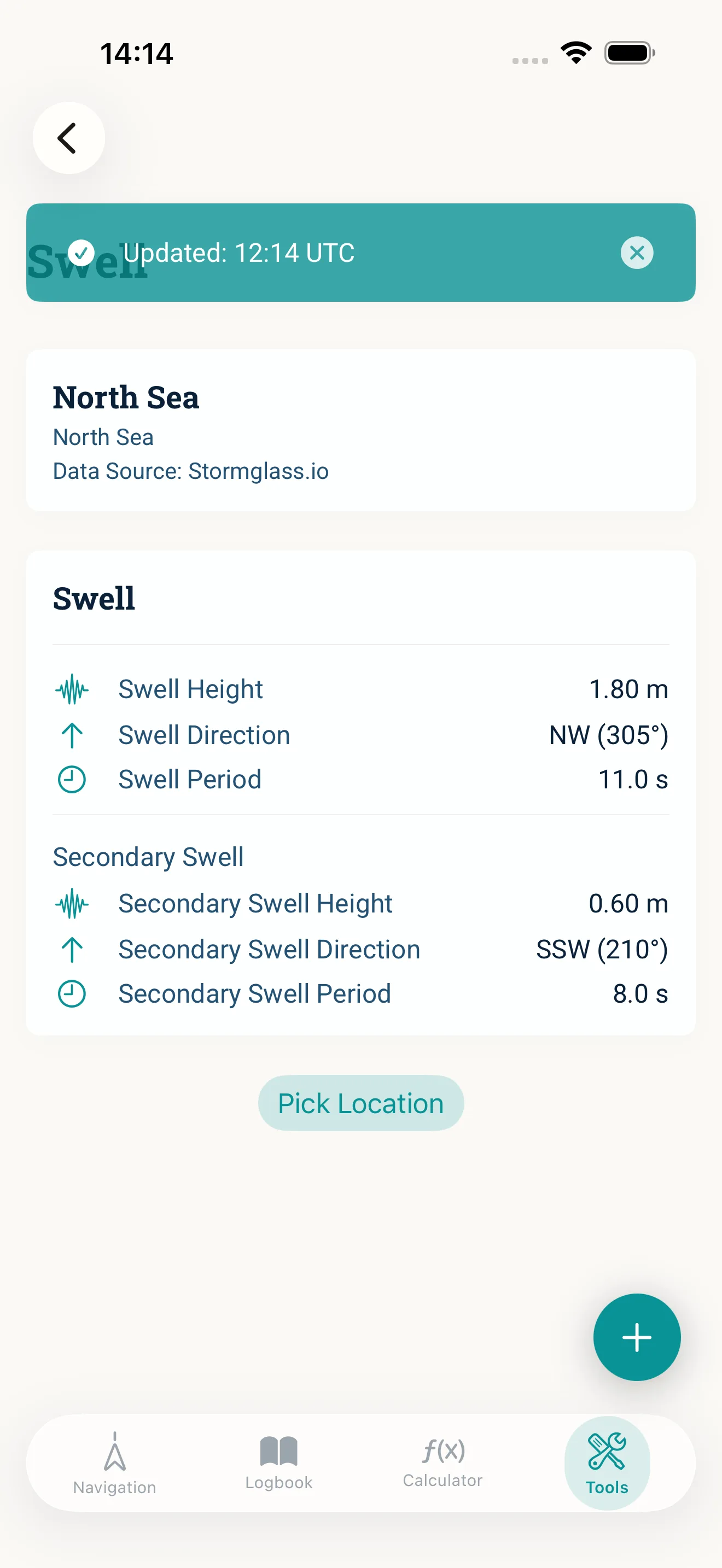
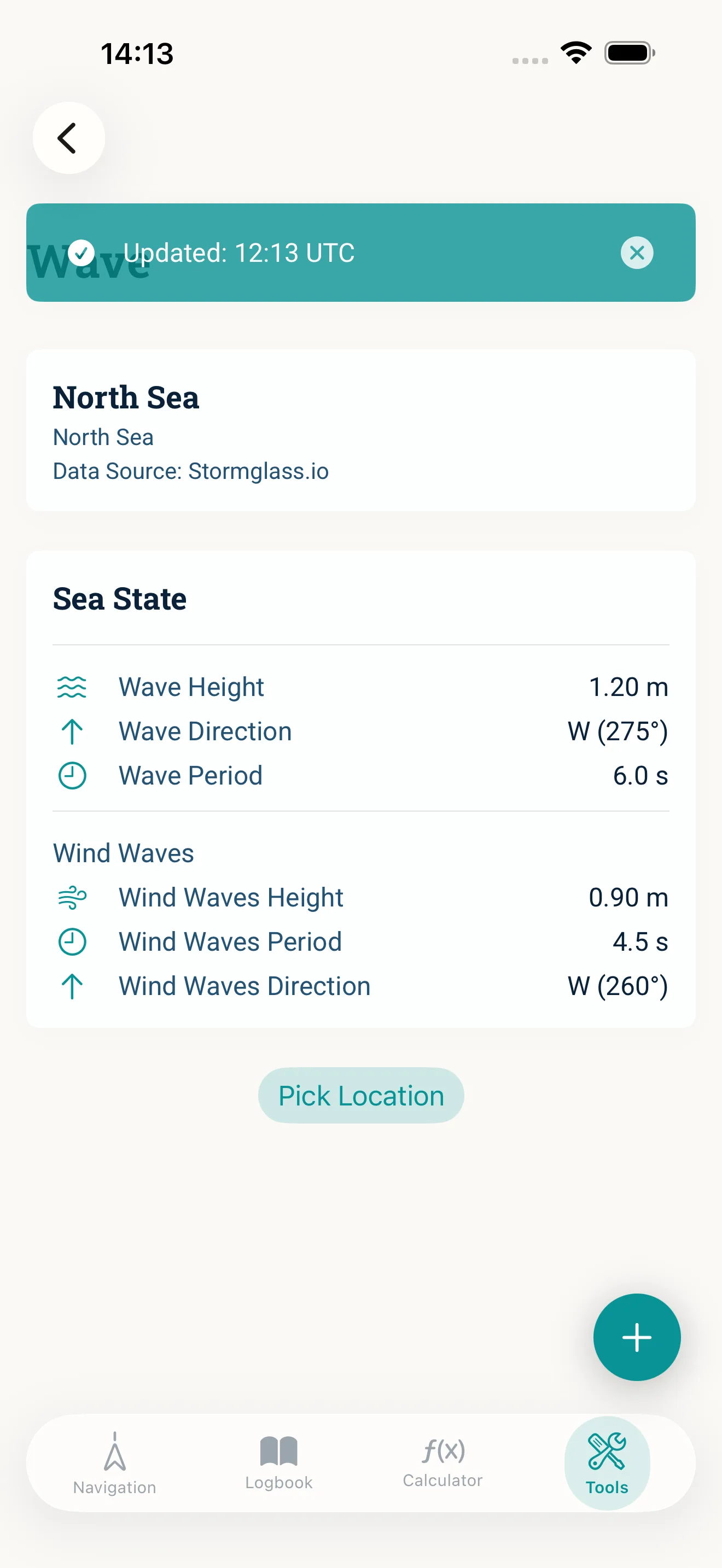
- Waves and swell: wave height, period and direction. Swell arriving from far away hints at weather that has not yet reached you.
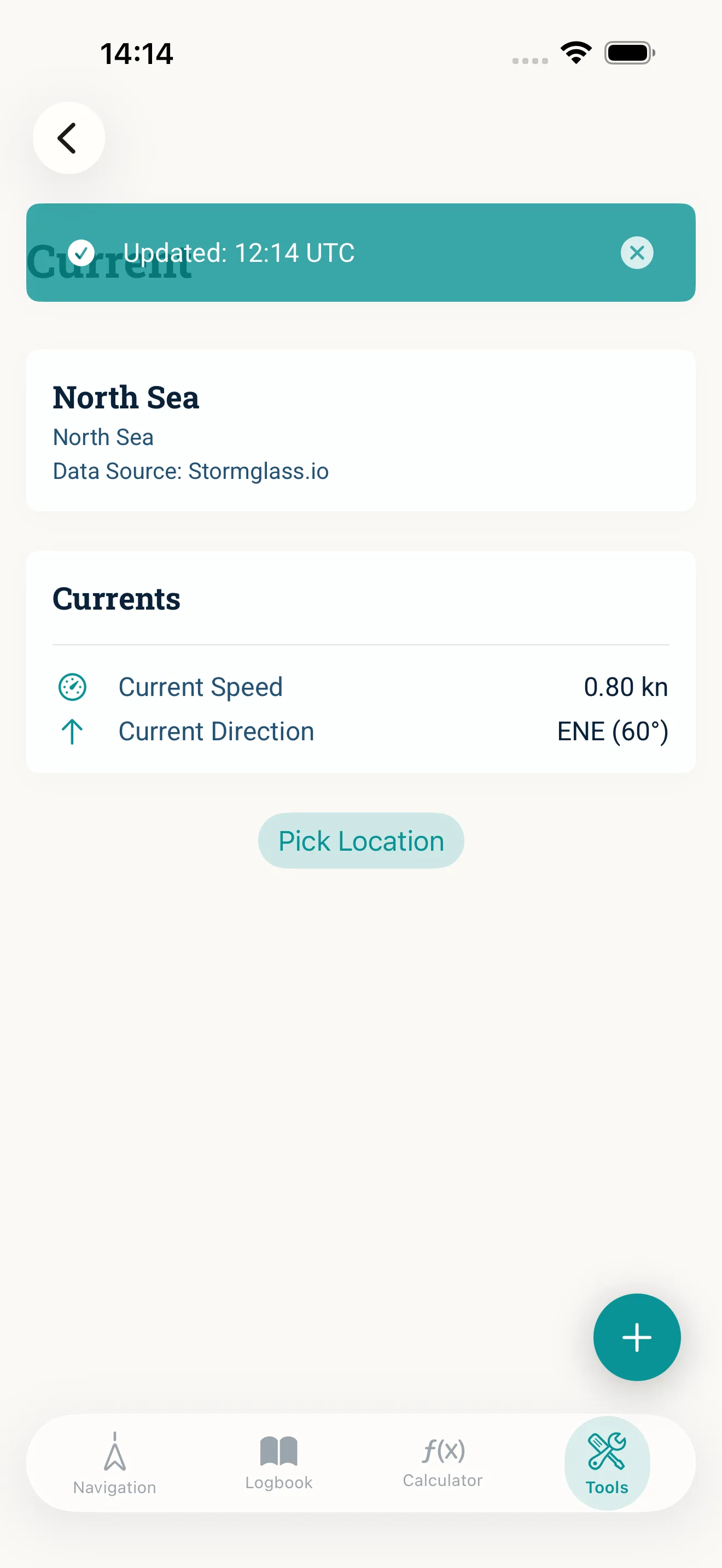
- Current: set and drift, which influence your course — the basis of course correction.
- Visibility and cloud cover for a rough read of the situation.
Live weather vs. offline
Live data is great as long as you have a signal. Out at sea the mobile network drops out quickly, though. So the rule is:
- Near the coast / in harbour: update live weather via your key, pull the forecast for the leg.
- Without a signal: fall back on the last downloaded forecast and on the offline calculations (course, tides, ETA). Details under Offline navigation.
A passage briefing bundles weather with ETA, tides and daylight — see Voyage Briefing.
Common mistakes
- Looking only at the mean wind and ignoring the gusts.
- Confusing swell with wind sea — both add up to the total seaway.
- Taking old data at face value because the signal has been gone for hours.
- No backup: relying on live weather alone, without an offline plan.
Conclusion
Weather on board means marine parameters, a clear data source and predictable costs. With BYOK you pull live weather through your own key — without a subscription — and combine it with the offline calculators for when the signal drops out.
Read more: Marine weather · Tides calculator · Offline at sea